Five-yearly electrical installation inspection in Poland: who may carry it out, what the report must contain and the c-KOB entry
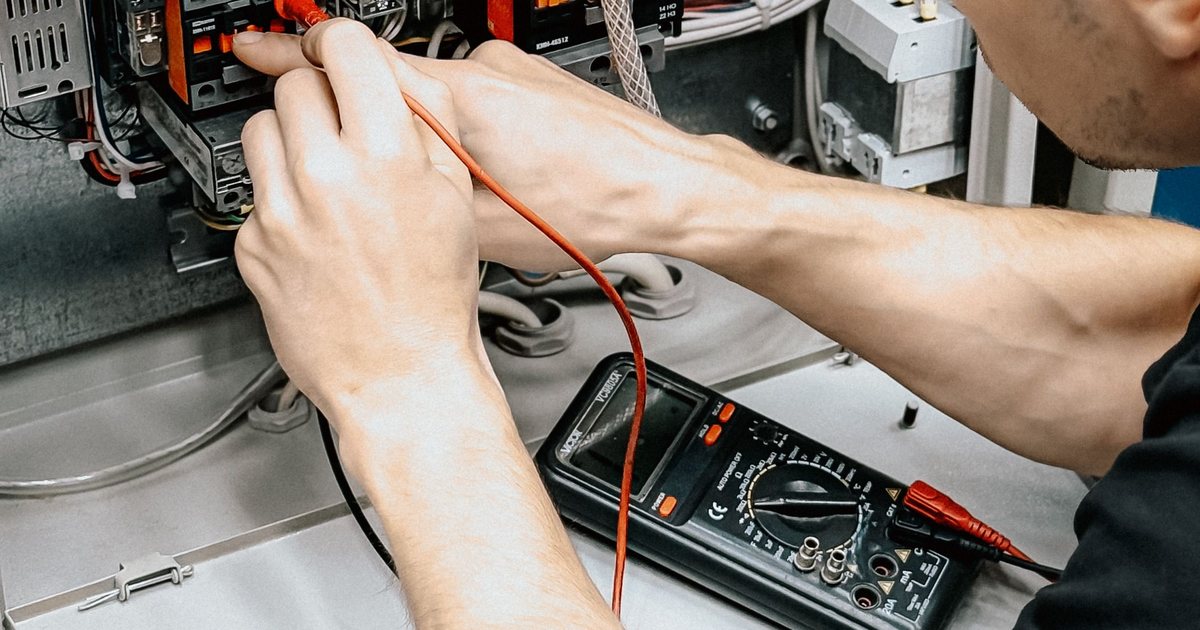
The duty to inspect electrical installations in buildings periodically comes from the Polish Construction Law (Prawo budowlane). The provisions are short but raise many questions in practice: do they apply to a detached house, who may sign the report and where it must be recorded. Below we discuss them based on the consolidated text of the act (Journal of Laws 2026 item 524).
What Article 62(1)(2) says
The owner or manager of a building must have it inspected during use periodically, at least once every 5 years. The inspection covers the technical condition and fitness for use of the building, and the act expressly states that it should also include testing of the electrical and lightning protection installation with regard to:
- the condition of connections, accessories and protective devices,
- protection against electric shock,
- insulation resistance of conductors,
- earthing of installations and apparatus.
The duty lies with the owner or manager, not with the installer. The electrician is the contractor whom the owner commissions to carry out the testing.
Other Article 62 inspections worth remembering
The five-yearly inspection is not the only one. Article 62(1) also requires an annual inspection (including gas installations and chimney flues), an inspection at least twice a year — by 31 May and by 30 November — for buildings with a footprint over 2,000 m² and other structures with a roof area over 1,000 m², and a safe-use inspection after the events referred to in Article 61(2) (such as strong winds or heavy precipitation). When commissioning electrical testing in a large retail or warehouse building, it makes sense to align it with the schedule of the other inspections.
Does it apply to detached houses?
Article 62(2) exempts owners of detached single-family houses, farm and holiday buildings and structures listed in Article 29(1) and (2) (with exceptions) from the inspection under paragraph 1(1)(a), i.e. the annual check of elements exposed to weather. The exemption does not cover the five-yearly inspection under paragraph 1(2). The text of the act therefore indicates that the five-yearly inspection, including electrical testing, also applies to detached houses. The building logbook is a different matter — see below.
Who may inspect the electrical installation
As a rule, inspections under Article 62(1) are carried out by persons holding building licences in the relevant speciality (Article 62(4)). For electrical and lightning protection installations the act adds an alternative: their technical condition may also be inspected by persons holding the qualifications required for supervision of the operation of energy equipment, installations and networks (Article 62(5)). In practice this means a supervision (D) qualification certificate issued under Article 54 of the Energy Law, valid for 5 years from the date of issue. An operation (E) certificate alone is not enough.
The report: minimum contents under Article 62a
The inspector draws up a report of each inspection. Article 62a(2) lists what it must contain as a minimum:
- the date of the inspection;
- the inspector's name, building licence number with speciality, and signature;
- the name of the owner or manager;
- identification of the building;
- the scope of the inspection;
- the findings, including any irregularities;
- recommendations where irregularities were found;
- methods and means of using elements exposed to harmful influences (where inspected);
- recommendations from previous inspections that have not been implemented.
Recommendations state the actions needed to remedy irregularities and the deadline for completing them (Article 62a(3)). Copies of the professional chamber membership certificate and the licence decision — or, for an inspector under Article 62(5), a copy of the document confirming qualifications — are attached (Article 62a(4)). Copies of the membership certificate and licence are not required if the person is entered in the central register of licence holders (paragraph 4a). Each inspection checks whether the recommendations of the previous one were implemented (Article 62(1a)).
The act does not prescribe a form for the electrical test report or the measurement methods. It is good practice to attach the measurement results (e.g. insulation resistance, effectiveness of shock protection, earth resistance) with a description of the instruments and methods, so that the report can be verified at the next inspection.
The building logbook and c-KOB
A building logbook (książka obiektu budowlanego) is kept for every building and certain other structures (Article 60b(1)), except, among others, detached single-family houses, garages and outbuildings serving them, and farm and holiday buildings (Article 60b(2)). It may be kept electronically in the c-KOB system or on paper.
Where a logbook exists, the person who carried out the inspection makes an entry within 7 days of completing it (Article 62b(1)). The inspector is therefore responsible not only for the report but also for the entry. The owner or manager keeps the building documentation listed in Article 63(1) for the entire life of the building; inspection reports are best kept with it.
Consequences of neglect
Article 93(8) provides for a fine for anyone who fails to meet the duties under Article 62(1)(1)–(4a) or Article 62b. An inspector's failure to make the Article 62b entry on time falls under point 8, and a fine also applies to the owner's or manager's failures relating to keeping the building logbook (Article 93(9)). In addition, where the building supervision authority finds a technical condition that threatens safety, it orders an inspection and may require an expert assessment (Article 62(3)).
Tips for contractors
- Before accepting the job, check that you hold a building licence in the electrical installation speciality or a valid supervision certificate for group 1.
- Ask for the previous report — you must assess whether earlier recommendations were implemented.
- Diary the 7-day deadline for the logbook entry.
- Give a specific deadline for remedying each irregularity — Article 62a(3) requires it.
Standards and legal sources
This article is for information only. The applicable regulations and standards and the manufacturer's documentation prevail.